

RESOURCES
For HCPs
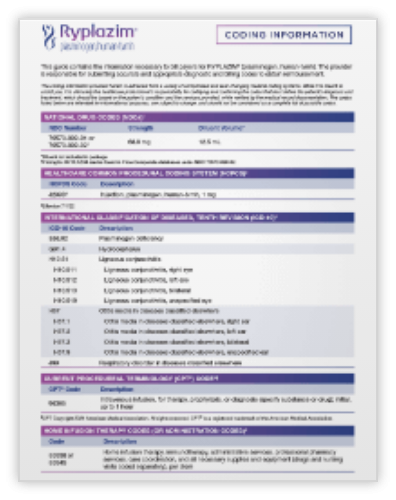
Accurate documentation and coding are critical to ensuring your patients receive appropriate reimbursement for RYPLAZIM® [plasminogen, human-tvmh].
Each claim must include correct diagnostic and billing codes to reflect the services provided and support payment from payers.
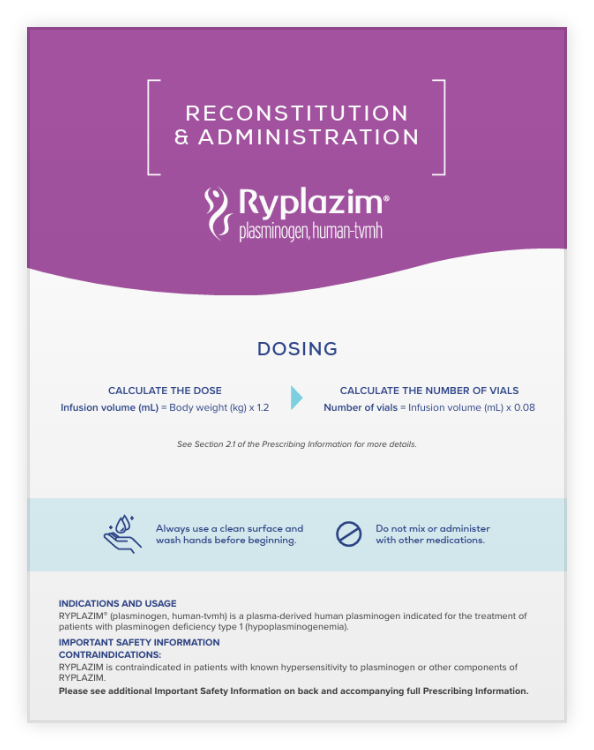
For detailed coding and billing information, download the RYPLAZIM billing and coding guide

For your Patients
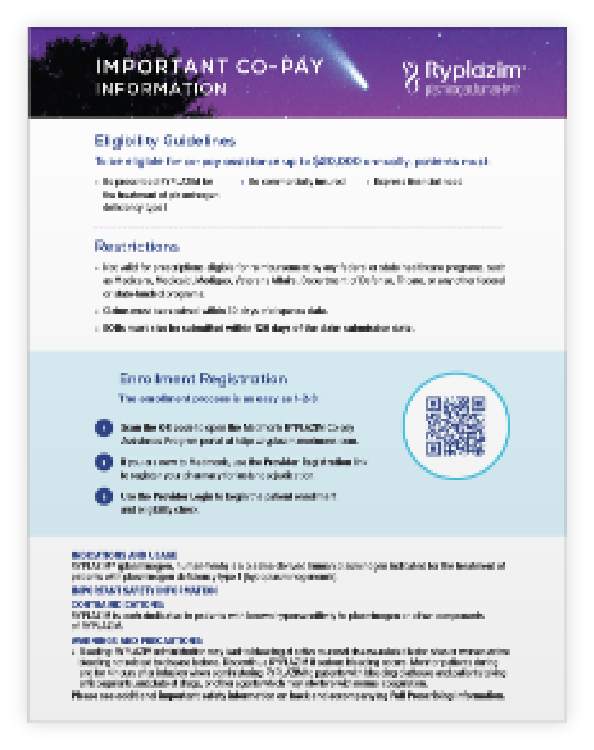
The RYPLAZIM Co-Pay Assistance Program may offer financial support to help with your patients' deductible, co-pay, and/or coinsurance for RYPLAZIM. This is coordinated with Kedrion through their specialty pharmacy.
To be eligible for co-pay assistance, your patient must:
- Be commercially insured
- Express a financial need
- Have a health plan that permits members to participate in co-pay assistance programs
Restrictions: Not valid for prescriptions eligible for reimbursement by any federal or state healthcare programs, such as Medicare, Medicaid, Medigap, Veterans Affairs, Department of Defense, Tricare, or any other federal or state-funded programs.
Note: Nursing and supply costs that may be associated with the administration of the medication are not eligible for assistance through this program.
This program is subject to change or discontinuation by Kedrion at any time, for any reason, and with or without prior notice.



Events
Patient testimonials

Diagnosed with PLGD-1: 6 months old
Years of RYPLAZIM: 6
Interests: Playing tennis, building legos, and playing video games
Diagnosed with PLGD-1: 2 years old
Years of RYPLAZIM: 2
Interests: Playing soccer, reading, and baking
Diagnosed with PLGD-1: 2 years old
Years of RYPLAZIM: 1.5
Interests: Karate, painting, family movie nights, and anything outdoors
Diagnosed with PLGD-1: 15 years old
Years of RYPLAZIM: 1.5
Interests: Writing and playing volleyball

INDICATIONS AND USAGE
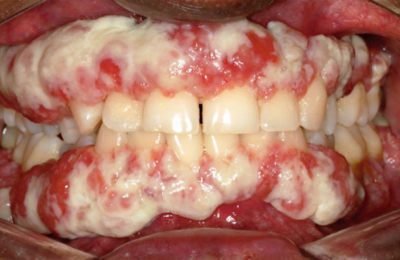
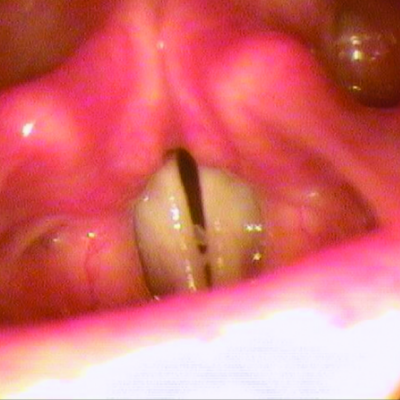
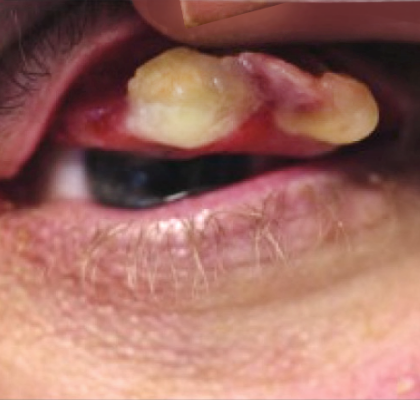
RYPLAZIM® (plasminogen, human-tvmh) is a plasma-derived human plasminogen indicated for the treatment of patients with plasminogen deficiency type 1 (hypoplasminogenemia).
IMPORTANT SAFETY INFORMATION
CONTRAINDICATIONS:
RYPLAZIM is contraindicated in patients with known hypersensitivity to plasminogen or other components of RYPLAZIM.
WARNINGS AND PRECAUTIONS:
- Bleeding: RYPLAZIM administration may lead to bleeding at active mucosal disease-related lesion sites or worsen active bleeding not related to disease lesions. Discontinue RYPLAZIM if serious bleeding occurs. Monitor patients during and for 4 hours after infusion when administering RYPLAZIM to patients with bleeding diatheses and patients taking anticoagulants, antiplatelet drugs, or other agents which may interfere with normal coagulation.
- Tissue Sloughing: Respiratory distress due to tissue sloughing may occur in patients with mucosal lesions in the tracheobronchial tree following RYPLAZIM administration. Please monitor appropriately.
- Transmission of Infectious Agents: RYPLAZIM is made from human plasma and therefore carries a risk of transmitting infectious agents, e.g., viruses, the variant Creutzfeldt-Jakob disease (vCJD) agent, and theoretically, the Creutzfeldt-Jakob Disease (CJD) agent.
- Hypersensitivity Reactions: Hypersensitivity reactions, including anaphylaxis, may occur with RYPLAZIM. If symptoms occur, discontinue RYPLAZIM and administer appropriate treatment.
- Neutralizing Antibodies: Neutralizing antibodies (inhibitors) may develop, although they were not observed in clinical trials. If clinical efficacy is not maintained (e.g., development of new or recurrent lesions), determine plasminogen activity trough levels in plasma.
- Laboratory Abnormalities: Patients receiving RYPLAZIM may have elevated blood levels of D-dimer. D-dimer levels will lack interpretability in patients being screened for venous thromboembolism (VTE).
ADVERSE REACTIONS:
The most frequent (incidence ≥ 10%) adverse reactions in clinical trials were abdominal pain, bloating, nausea, fatigue, extremity pain, hemorrhage, constipation, dry mouth, headache, dizziness, arthralgia, and back pain.
To report SUSPECTED ADVERSE REACTIONS, contact KEDRION at 1-855-427-6378 or the FDA at 1-800-FDA-1088 or www.fda.gov/medwatch.
Click here for the RYPLAZIM Full Prescribing Information.
This site is intended for residents of the US only.